Beirut Port: Trauma-informed approach in place making

Ensieh Salaran, Roya Raeisi, Advisor: Asst. Prof. Dr. Ehsan REZA
student
CIU
Islamic Republic of Iran
Architecture
It must be a place of remembrance and healing, a place where we must remember to be healed. But this concept and its embodiment require a 'different' process… more
Bank
|
Shopping Mall
|
Cultural Center
|
Gallery
|
Hall/Theatre
|
Memorial
|
Community Center
|
Hotel
|
Restaurant
|
Warehouse
|
Public spaces
|
Gardens
|
Bridges
|
Public transport
|
Marina and Ports
|
Parking
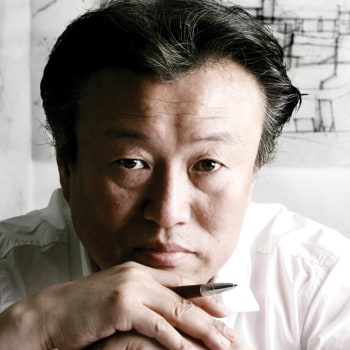
Byung Kil Bae
advisor
www.ucla.edu
Republic of Korea
My architecture is concerned with the fundamental perception of the interrelationship between… more
Above all, some important words to approach this project attracted my attention.
First, "Memories and healing places, remember for us to heal."
It has to be a hot place."
Second, "At the moment of pain and loss, we take it off from our perspective
You can only see things from different angles.
Third, "Wound is where light enters you."
Fourth, "The collective memories of society must not be trampled or erased."
Looking at the above, it is composed of very important vocabulary that is difficult for everyone to deny.
In addition, the above should be the starting point of architectural design and the final destination reflected in architecture. However, even if it is a very important object of recognition in urban/architectural design, the question of how to reflect/expression it in architectural form or space is another category.
The architect tries to overcome his curiosity through a collision with a traditional and closed useless system. Its architectural method seeks to tell them what happened through stories and place-making.
to be continued
08.07.2022

Copyright © 2026 INSPIRELI | All rights reserved. Use of this website signifies your agreement to the Terms of Use, Privacy Policy, and use of cookies.
